

How Long Do Building and Pest Inspections Take?
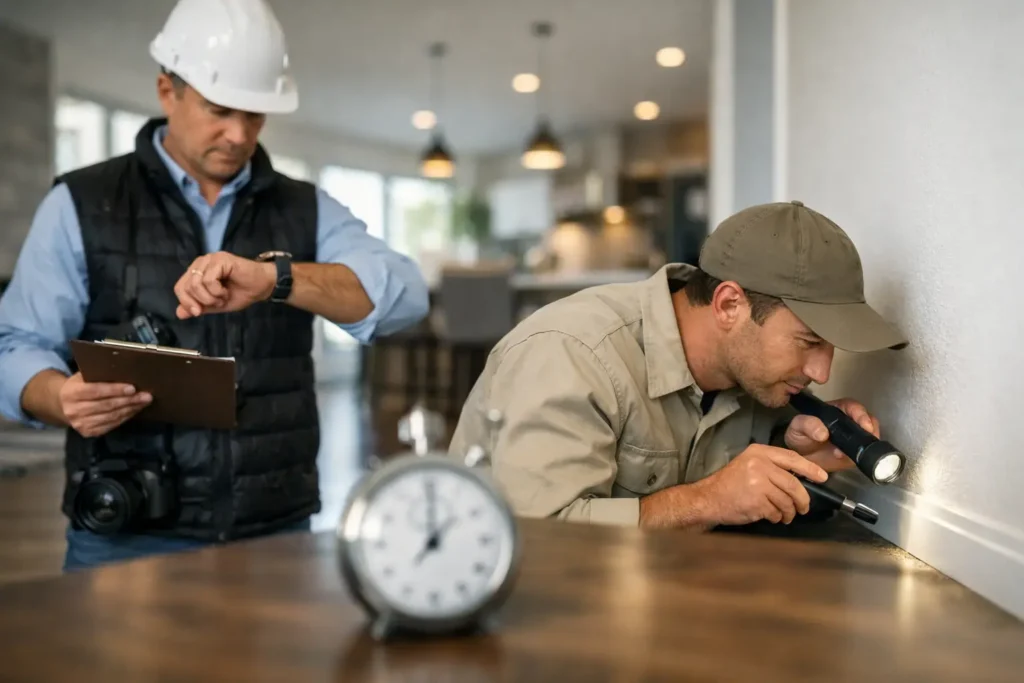
If you are trying to line up finance, settlement, access with the agent, and a dozen other moving parts, one practical question comes up fast: how long do building and pest inspections take? It matters because timing affects everything from booking the inspection to receiving the report and making a confident decision before deadlines start closing in.
The short answer is that most combined building and pest inspections on a standard home take around 1.5 to 3 hours on site. Smaller units may be quicker. Larger homes, older properties, or houses with access limitations can take longer. The report is usually issued after the inspection, often the same day or within 24 hours depending on the scope and inspector.
That said, there is no honest one-size-fits-all timeframe. A thorough inspection should take as long as the property requires. If someone is in and out too quickly, that can be a warning sign that the assessment is more of a checklist exercise than a careful review.
How long do building and pest inspections take on average?
For a typical Perth home, a combined building and pest inspection often sits in the 2-hour range on site. That is a useful guide, but the real timing depends on what the inspector is dealing with once they arrive.
A two-bedroom villa with good access, clear subfloor entry, and a straightforward roof space is very different from a large two-storey family home with retaining walls, moisture staining, patchy maintenance history, and a crowded roof cavity. Both are residential properties, but they do not require the same amount of inspection time.
As a general rule, you can expect shorter timeframes for smaller, newer, and easier-to-access homes. You can expect longer timeframes for older properties, homes with extensions, signs of movement, moisture issues, or anything that needs closer investigation.
What affects inspection time?
Property size is the obvious factor, but it is not the only one. Condition and accessibility often make a bigger difference than floor area alone.
A well-maintained home with clear access to key areas is quicker to assess than a cluttered property where the inspector cannot easily reach the roof void, subfloor, wet areas, external walls, or outbuildings. If furniture, stored items, locked rooms, or restricted access points limit what can be viewed, time can increase while access is sorted out. In some cases, areas may need to be noted as inaccessible.
Age also matters. Older homes generally take longer because they tend to present more variation in construction methods, more wear, and a higher chance of defects that need careful interpretation. Cracking, uneven floors, ageing roof coverings, moisture ingress, timber decay, patch repairs, and older additions all require more attention than a modern home with consistent finishes and recent construction.
The inspection type matters too. A combined building and pest inspection covers more than a basic visual sweep. The inspector is assessing structural elements, workmanship, moisture-related issues, safety concerns, maintenance items, and signs of timber pest activity or damage. If there are suspected issues in multiple areas, time on site increases because those findings need to be checked properly and recorded accurately.
Why a thorough inspection should not be rushed
For buyers and property owners, speed is convenient. Accuracy is what saves money.
A proper inspection is not just about spotting obvious defects from the front gate. It involves checking the condition of major accessible areas, looking for patterns, comparing symptoms across different parts of the home, and distinguishing between minor wear and something that may have a larger cause.
For example, a crack in isolation may be cosmetic. A crack combined with uneven floors, door misalignment, external movement, and drainage issues tells a different story. Moisture staining on a ceiling could be old and inactive, or it could point to an ongoing roof leak. A rushed inspection may note the symptom. A careful inspector looks at what could be behind it.
That is why experience matters. An inspector with real construction knowledge can often identify whether an issue is likely to be superficial, structural, moisture-related, workmanship-related, or something that needs further review. That judgement takes time, and it is part of the value of the inspection.
How long does the report take after the inspection?
Clients often focus on the on-site duration, but the report turnaround matters just as much. Once the inspection is complete, the inspector still needs to organise findings, review photos, assess the significance of defects, and prepare a clear report.
In many cases, you can expect the report on the same day or within 24 hours. Some providers may take longer if the property is complex or if additional investigation notes are needed. Fast reporting is helpful, but clarity matters more than a rushed document full of vague comments and generic disclaimers.
A useful report should explain what was found, where it was found, how serious it appears, and what action may be appropriate next. For buyers especially, that clarity can make the difference between moving forward with confidence, renegotiating, or stepping back before settlement.
Common situations that can make an inspection take longer
There are a few recurring scenarios where the timeframe stretches beyond the usual estimate.
Older homes in Perth and wider WA often need more time because they may have a mix of original and altered construction. Renovations can add another layer of complexity, especially where workmanship quality varies or where newer work meets older materials.
Large blocks can also extend the inspection. It is not only the house that is relevant. Garages, patios, sheds, retaining walls, site drainage, fencing interfaces, and external defects can all contribute to the overall picture.
Pest-related concerns are another factor. If there are signs of timber pest damage, conducive conditions, excessive moisture, or areas that suggest previous treatment or repairs, the inspector may spend more time documenting evidence and checking surrounding zones.
Access issues are probably the most avoidable delay. Locked gates, sealed manholes, blocked subfloor entries, heavy storage in garages, and packed roof void access points all slow the process down. In some properties, they also limit what can reasonably be inspected.
How to help the inspection run smoothly
If you are arranging the inspection, a bit of preparation can make the process more efficient and reduce the chance of missed access.
Make sure all accessible areas can actually be accessed. That includes the roof space, subfloor where applicable, garage, external boundaries, wet areas, and any outbuildings included in the inspection. If pets are on site, secure them beforehand. If the property is tenanted, confirm access arrangements early rather than assuming everything will be open on the day.
If you already know about past leaks, repairs, renovations, termite treatments, or recurring issues, it can help to mention them. A good inspector will still carry out an independent assessment, but relevant background can be useful context.
Should you attend the inspection?
If the inspector allows it, attending at the end of the inspection can be worthwhile. It gives you a chance to hear the main findings in plain English and ask practical questions before reading the report in detail.
It is usually better to avoid shadowing the entire inspection unless invited to do so. Inspectors need to concentrate, move around safely, and follow a consistent process. A short discussion after the on-site work is often the most useful approach for everyone.
The real answer is quality over speed
When people ask how long do building and pest inspections take, they are usually trying to judge whether the process will fit their timeline. That is fair. Property decisions often run on tight deadlines.
But the better question is whether the inspector is allowing enough time to do the job properly. A fast booking and prompt report are valuable. They should not come at the expense of a careful inspection, practical judgement, and clear advice you can actually rely on.
At Rushe Building Inspections, that balance matters. Clients want responsiveness, but they also want an inspection grounded in real construction experience and reporting that helps them make a sound decision.
If you are booking an inspection, allow enough time not just for the site visit, but for the report and any follow-up questions. A few extra hours in the process is a small price to pay for clarity before you commit to a property.


Get Your Inspection Quote
Quick, independent building inspections across Perth. Request a fast, no-obligation quote today.
Building Inspections Made Simple with Rushe
Know the true condition of your property with Rushe Building Inspections—delivering clear reports, expert guidance, and total peace of mind for homeowners and buyers.
Detailed Reports

Local Expertise

5-Star Service

Trusted Service
Receive a Fast, No-Obligation Quote
Share a few details and receive a free, no-obligation quote for your building inspection.